

I still remember the first time a friend told me she was getting paid in dollars to “chat with AI” from her bedroom in Nairobi. I thought she was joking. Three months later, she showed me her Payoneer balance, and I stopped laughing.
That conversation sent me down a rabbit hole. I spent weeks testing platforms, reading fine print, and talking to Kenyan and Nigerian workers who do this daily. What I found surprised me: AI training is one of the most realistic online income streams open to Africans right now, and most people have no idea it exists.
This guide breaks down the ten companies actually paying Africans to train AI models in 2026. I’ll cover what the work involves, roughly what you can earn, and how to get your foot in the door without wasting time on scams.
What Does It Mean to “Train AI”?
Every chatbot, voice assistant, or self-driving car system needs human judgment before it can work well. Someone has to tell the AI when its answer is helpful, when it’s wrong, or when an image contains a stop sign.
That someone is you.
This work goes by a few names: data annotation, data labeling, AI evaluation, or human feedback. It can mean rating chatbot responses, transcribing audio, drawing boxes around objects in photos, or checking if a translation sounds natural.
Companies building AI need workers who understand different languages, accents, and cultural context. That’s exactly what African talent brings to the table. Strong English skills, local language fluency, and a fast-growing pool of digitally savvy young people make the continent attractive to AI companies scrambling for human feedback at scale.
The pay isn’t always huge, but it’s real money, often in US dollars, and you can start with nothing more than a laptop and steady internet.
1. Sama
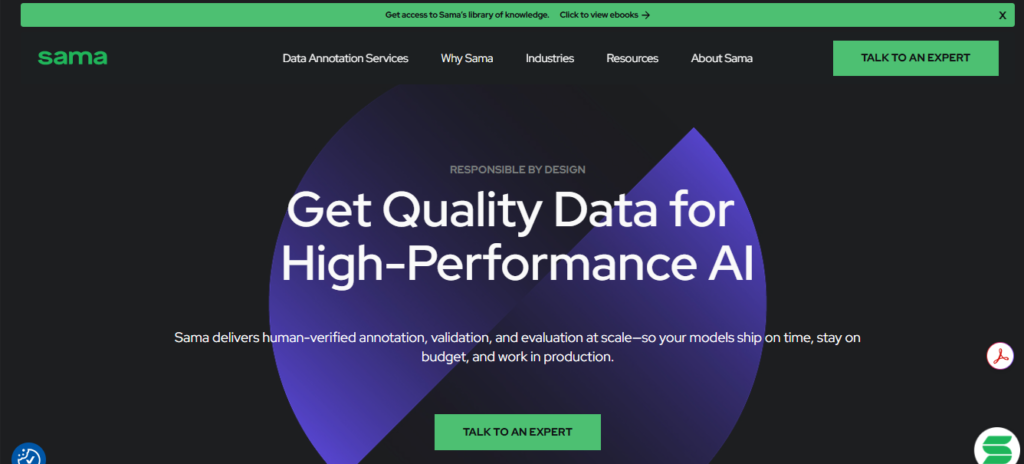
Sama, formerly known as Samasource, is probably the biggest name in AI training on the African continent. The company runs a major operations hub in Nairobi and has built its whole mission around creating dignified digital jobs for people who might otherwise struggle to access formal employment.
I like Sama because it doesn’t hide behind vague online applications. It runs an actual training program called AI 101, which teaches you the basics of data annotation before you ever touch real client work. You apply online, pass a short assessment, and if you’re accepted, you go through the course.
Once you finish AI 101, you become eligible to work as a Data Training Agent. From there, Sama assigns you to projects that range from image and video labeling to more advanced computer vision tasks for clients in automotive, agriculture, and e-commerce.
What sets Sama apart is that this is proper employment, not gig work. You get a contract, a workstation if you’re office-based, and benefits like health insurance and subsidized meals in some roles. That’s rare in this space.
My honest take: if you’re in or near Nairobi and want structure, training, and a real employer relationship instead of unpredictable gig income, Sama is worth applying to first.
2. Outlier AI
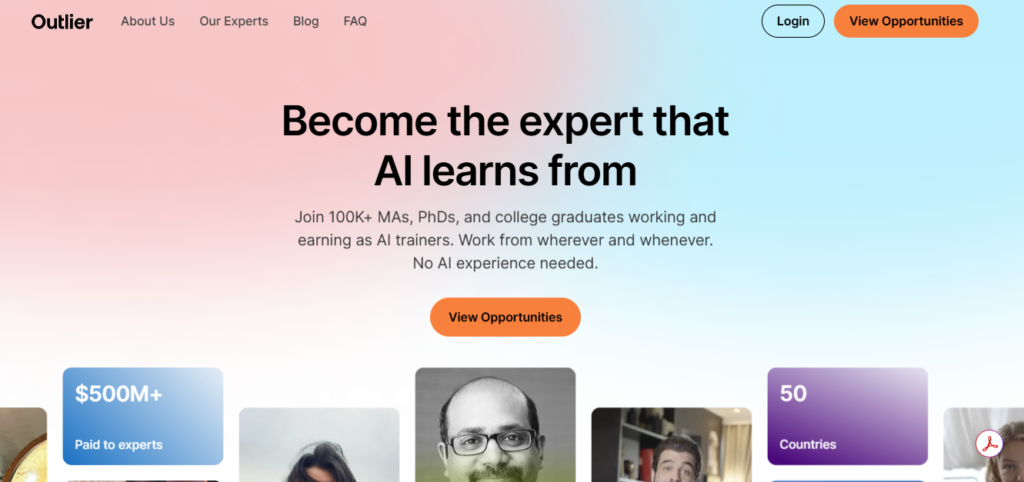
Outlier is the platform I hear about most from young Kenyans and Nigerians trying to break into AI work from home. It’s run by Scale AI, one of the biggest data companies powering major AI labs.
The tasks on Outlier lean toward writing, reasoning, and evaluation. You might be asked to rank chatbot answers, spot errors in code, or judge which of two AI responses reads more naturally. Some projects also include image and video annotation.
Signing up is straightforward. You create a free account, complete a short skills assessment for the task category you’re interested in, and wait for project invitations. Strong English writing skills genuinely help here, since a lot of the work involves careful reading and judgment.
Payment happens through PayPal, and workers report getting paid weekly once they’re active on a project. Rates vary by task type, but skilled writers and people with subject-matter knowledge in fields like coding or math tend to land the better-paying assignments.
One bonus tip: keep your acceptance rate high on early tasks. Outlier’s system seems to reward consistent, careful workers with access to more advanced, better-paid projects over time.
3. Remotasks (by Scale AI)
Remotasks is Scale AI’s other public-facing platform, and it’s often the easiest entry point for someone who has zero experience with AI training work.
The reason it’s beginner-friendly is the built-in training courses. Before you can earn on any task category, Remotasks walks you through free lessons that explain exactly what’s expected. You don’t need a portfolio or prior tech background to start.
Task types on Remotasks include image annotation, LiDAR labeling for self-driving cars, text classification, and content moderation-style work. The variety means there’s usually something suited to your strengths, whether that’s visual pattern recognition or careful reading.
Kenyan and Nigerian users have reported success getting accepted onto the platform, though project availability does shift depending on what Scale AI’s clients currently need. It’s smart to check in regularly rather than assuming tasks will always be waiting.
As a side note, Remotasks pays through PayPal and other digital wallets, which works fine for most African workers without a US bank account. Just budget for currency conversion fees when you withdraw.
4. DataAnnotation.tech
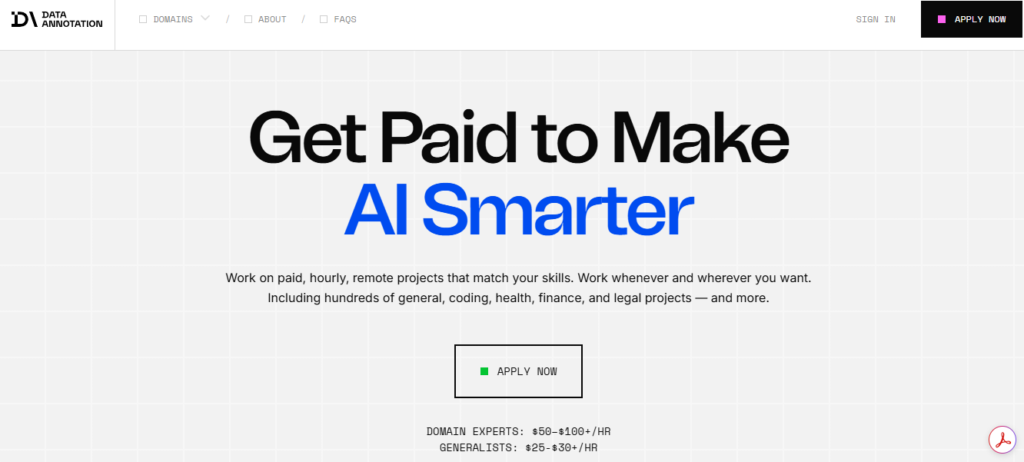
DataAnnotation has become a favorite among African freelancers I’ve spoken to, mainly because it’s one of the more open platforms when it comes to accepting applicants from across the continent.
The work covers a wide range, from simple text classification to more complex tasks like evaluating and correcting AI-generated code. If you have any background in writing, teaching, coding, or research, you’ll find tasks that use those skills directly.
Getting started means creating an account, completing a qualification task, and waiting for approval. Some workers get in within days, others wait longer, so patience matters here. Once approved, you can browse available projects and pick ones that match your skills.
Pay is generally considered competitive compared to other platforms in this list, and DataAnnotation pays out through PayPal on a regular schedule. Many users treat it as a solid side income rather than a full replacement for a day job, since task availability can be inconsistent.
My honest recommendation: apply to DataAnnotation alongside one or two other platforms. Don’t put all your hopes on a single approval, since acceptance isn’t guaranteed and can take a while.
5. Appen

Appen is one of the oldest and most established names in the data labeling industry, and it has worked with African contributors for years, well before the recent AI boom made this kind of work trendy.
The company handles projects like search engine evaluation, AI chatbot training, image tagging, and audio transcription. Because Appen serves so many different clients, the task variety tends to be broader than newer platforms.
You apply through the Appen Connect portal, fill in your profile, and get matched to available projects based on your location and language skills. Some projects are open to most African countries, while others are restricted by region, so check eligibility carefully before applying.
One thing I appreciate about Appen is its long track record. It’s a publicly known company with an established reputation, which matters if you’re worried about getting scammed by a platform that disappears with your unpaid earnings.
Pay rates and project frequency can feel inconsistent month to month, since Appen’s work depends entirely on which client contracts are active. Treat it as a rotating income stream rather than a guaranteed monthly paycheck.
6. Toloka AI

Toloka is a crowdsourcing platform that hands out microtasks related to AI training, and it’s a good option if you want flexibility above everything else.
Tasks on Toloka include labeling images, checking search results, transcribing short audio clips, and answering simple survey-style questions used to train machine learning models. Individual tasks pay small amounts, but they add up if you work steadily.
Signing up is fast. You create an account, browse the task marketplace, and start working immediately on tasks you qualify for. There’s no lengthy interview process, which makes it appealing if you want to earn something today rather than wait weeks for approval.
The tradeoff is that per-task pay tends to be lower than on platforms like Outlier or DataAnnotation. Toloka works best as a side hustle you do in short bursts, maybe while watching TV or waiting for something else, rather than your main income source.
As a bonus, Toloka supports payout through several international payment methods, which makes it accessible even if you don’t have a US-linked bank account.
7. Clickworker
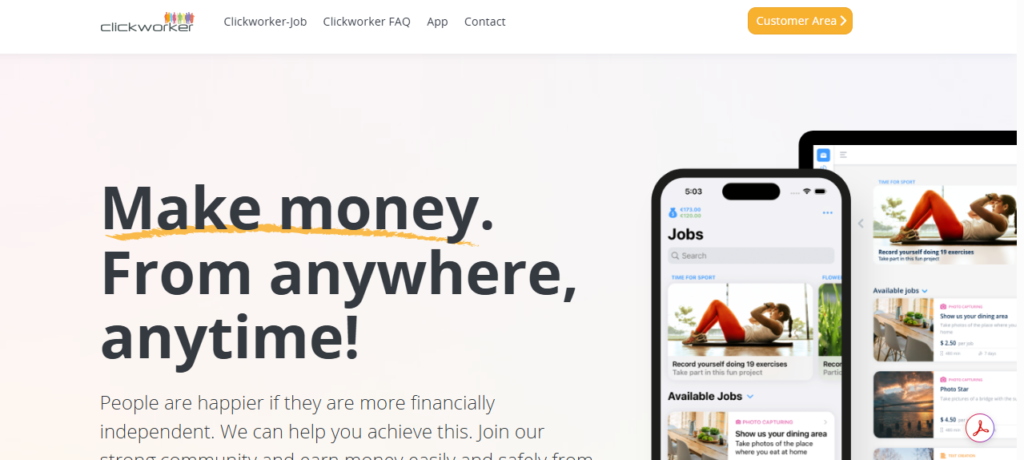
Clickworker isn’t purely an AI training platform, but a good chunk of its microtask catalog now feeds directly into AI development, including text creation, categorization, and data verification tasks.
What I like about Clickworker for African users specifically is the payment flexibility. It supports several international payout options that work well for people without traditional US or European bank accounts, which is a real barrier on some competing platforms.
The application process is simple. You register, fill out a profile with your skills and languages, and complete a few qualification tests. Once approved, you can browse available “clicks,” which is what Clickworker calls its individual tasks.
Task pay is modest per item, similar to Toloka, so this works best when combined with other income sources rather than relied on alone. Consistency and speed matter if you want to earn a meaningful amount.
One small tip from my own testing: keep notifications on. Clickworker tasks can fill up fast once they’re posted, especially the better-paying ones, so quick reactions matter.
8. TELUS International AI
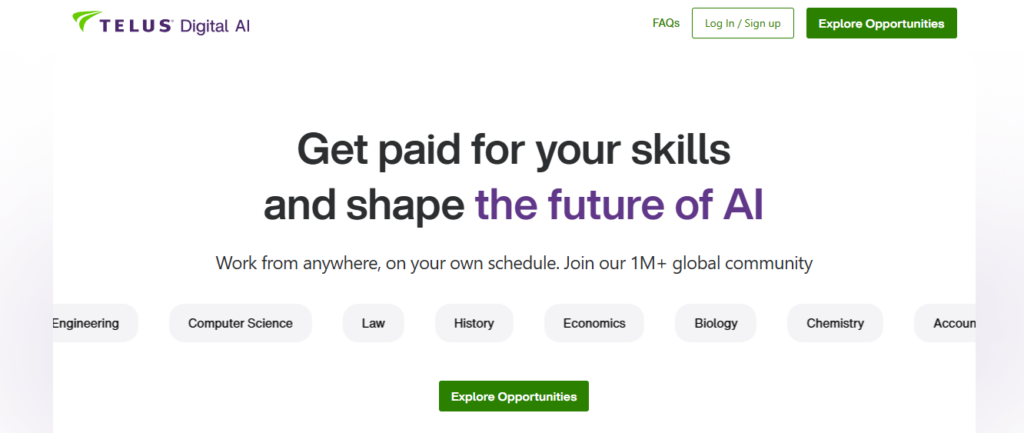
TELUS International runs large-scale AI training projects on behalf of major technology companies, and it regularly needs human reviewers for chatbot evaluation, search quality assessment, and content moderation work.
This platform tends to attract people who want something closer to structured, ongoing work rather than scattered microtasks. Projects often come with clearer guidelines and more consistent task flow once you’re accepted.
To get started, you apply through TELUS International’s careers or AI community portal, complete an assessment relevant to the project category, and wait for onboarding instructions if selected. Some roles are treated more like part-time contract positions than casual gig work.
Because TELUS works with major clients across search, social media, and generative AI companies, project types shift often. One month you might be reviewing search results, and the next you could be evaluating chatbot conversations for safety and helpfulness.
From what I’ve seen, pay and consistency here tend to be solid once you’re established, but getting through the initial screening can take effort. Treat your application seriously and follow every instruction precisely, since attention to detail is exactly what they’re testing for.
9. Mindrift
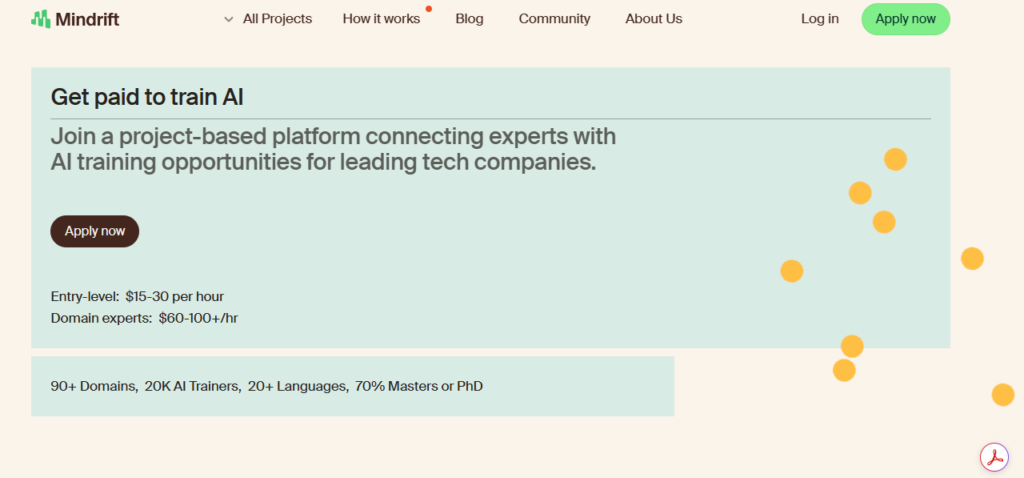
Mindrift is a newer platform built specifically to connect specialists and everyday workers with AI training projects for generative AI models, and it has been actively accepting applicants from most African countries.
The tasks here often skew toward more specialized knowledge than basic labeling work. Depending on the project, you might be asked to write prompts, evaluate AI responses in your field of expertise, or help train models in specific subject areas like law, medicine, or coding.
This makes Mindrift a strong option if you have professional or academic background in a niche field. General workers can still find tasks, but subject-matter experts tend to unlock the higher-paying projects.
Signing up involves creating a profile, listing your expertise areas, and waiting for project matches. Not every applicant gets consistent work right away, since Mindrift assigns tasks based on client demand for specific skill sets.
Payment is typically handled through bank transfer or digital wallets, and rates can be noticeably higher than basic microtask platforms when your expertise matches an active project. It’s worth checking back regularly, since new projects open without much warning.
10. Surge AI
Surge AI has built a reputation for paying some of the highest rates in the industry, and reports from Kenyan workers suggest hourly pay well above what most other platforms offer.
The catch is accessibility. Surge doesn’t run an open, public application process the way Outlier or DataAnnotation does. Access often comes through invitation, referral, or applying when a rare public opening appears.
Tasks on Surge focus heavily on writing quality, reasoning, and detailed evaluation work, which explains the higher pay. Clients want careful, thoughtful human judgment, not just quick clicks.
If you want a shot at Surge, keep an eye on their careers page and any public sign-up forms that occasionally open. Networking with people already working there, respectfully, can also help since referrals seem to carry weight.
My honest advice: don’t wait around for Surge as your only plan. Apply while you’re already earning from a more accessible platform, and treat Surge as a bonus opportunity rather than your starting point.
Real Talk: Pitfalls to Watch Out For
Before you rush off to sign up for everything, let’s talk about the messy parts nobody puts in the headline.
Scam listings are everywhere. If a “recruiter” asks you to pay money upfront for training materials or a starter kit, walk away immediately. Legitimate AI training platforms never charge you to work for them.
Task availability isn’t guaranteed. Even on legitimate platforms, work can dry up for weeks depending on client demand. Don’t quit your day job the moment you get approved somewhere.
Approval doesn’t always come fast. Some platforms, especially the higher-paying ones, can take weeks or even months to accept new workers. Apply to a few platforms at once instead of pinning your hopes on one.
Currency conversion eats into your earnings. Whether you’re withdrawing through PayPal, Payoneer, or a direct bank transfer, check the fees and exchange rate before you celebrate a payout.
Consistency beats speed. Workers who stay accurate and follow instructions carefully tend to get more task invitations over time. Rushing through tasks to earn faster often backfires with lower ratings and fewer opportunities.
Quick FAQ
Do I need a degree to train AI? No. Most platforms on this list only care about your English skills, attention to detail, and reliability. A degree can help with specialist projects on places like Mindrift, but it’s not a requirement to start.
How much can I realistically earn? It depends heavily on the platform and how many hours you put in. Entry-level microtask work often pays a modest hourly rate, while writing-heavy or specialist evaluation work on platforms like Outlier and Surge can pay significantly more. Treat early estimates as rough guides rather than promises.
Can I do this work on a phone? Some microtask platforms like Toloka and Clickworker are phone-friendly for simple jobs. Anything involving detailed writing, coding review, or video annotation works far better on a laptop or desktop, so budget for that if you’re serious about scaling up.
How do I get paid as an African worker? Most platforms use PayPal, Payoneer, or direct bank transfer. A few, like Sama, run local payroll for employed workers. Always confirm the payout method before you invest hours into a platform, especially if you don’t already have an international payment account set up.
Is this work steady enough to replace a full-time job? For a small number of highly consistent, high-rated workers, yes. For most people, it works best as a reliable side income while you build a track record. Combine two or three platforms so you’re never fully dependent on one client’s project schedule.
Final Thoughts
AI training work won’t make you rich overnight, but it’s one of the few online income streams genuinely open to Africans without needing a degree, savings, or connections abroad. All you really need is a laptop, steady internet, and patience while you build up your standing on these platforms.
My suggestion is to start with two or three platforms from this list, ideally one open-access option like DataAnnotation or Toloka alongside one more structured one like Sama or Outlier. See what fits your schedule and skills before committing more time.
Have you tried any of these platforms already? I’d genuinely love to hear which one worked best for you, and if you hit any snags along the way, drop them in the comments so other readers can avoid the same mistakes.