

Real strategies that are working right now — turn your phone, your voice, and your story into steady income.
Let me be honest with you. When I first started posting videos online, I had no idea I could turn 60-second clips into real money. I thought creators in Kenya had to wait years before seeing a single shilling from their content. I was wrong.
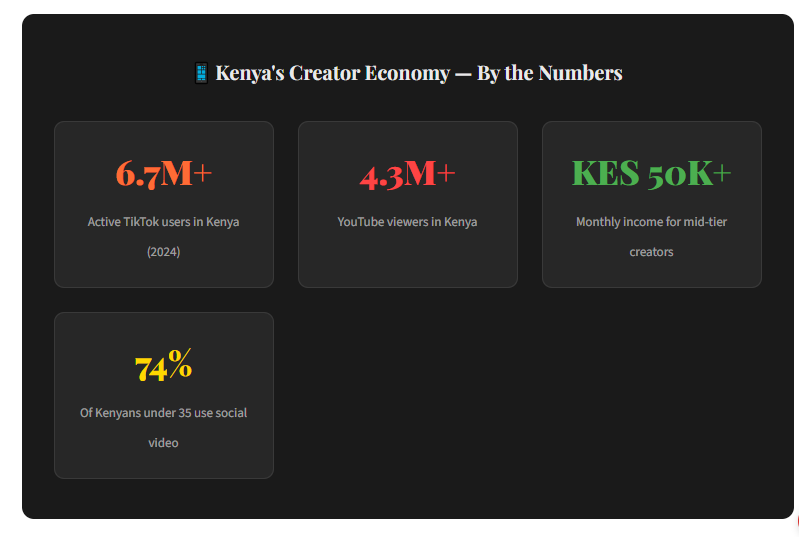
The digital creator economy has exploded across Africa. Kenyan creators are building audiences, landing brand deals, and selling products — all through TikTok and YouTube. And the best part? You do not need expensive equipment or millions of followers to start earning.
In this guide, I am going to walk you through 10 solid income ideas. Each one is practical, tested, and actually works for our market. Whether you have 500 followers or 500,000, there is a strategy here for you.
Who is this article for? Any Kenyan content creator — beginner or experienced — who wants to move beyond “likes” and start building real income from TikTok and YouTube.
You will need: a smartphone, an internet connection, and the willingness to show up consistently. That is all.
1. Brand Sponsorships & Influencer Deals
TikTokYouTubeKES 15,000 – KES 200,000+ per deal
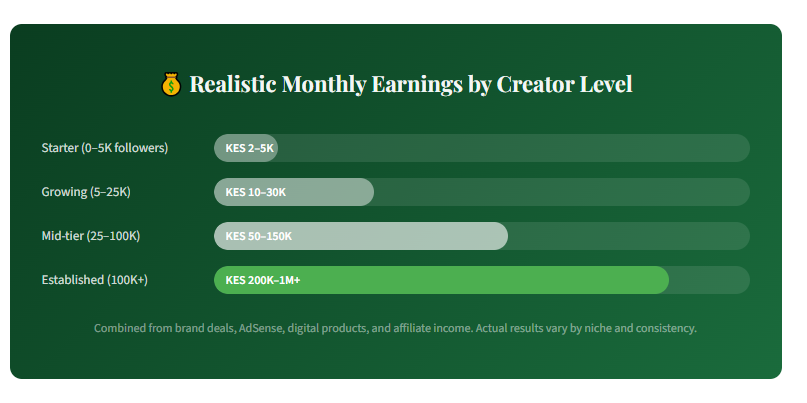
Brand deals are the fastest way Kenyan creators start making real money. A company pays you to feature their product or service in your content. This can be anything — a skincare brand, a mobile app, a university, a bank, or even a local restaurant.
The beauty of this model is that you do not need a million followers. Micro-influencers — creators with 5,000 to 50,000 followers — often get the best engagement rates and are very attractive to local brands. Kenyan brands like Safaricom, Equity Bank, Nairobi Bottlers, and Jumia are actively paying creators right now.
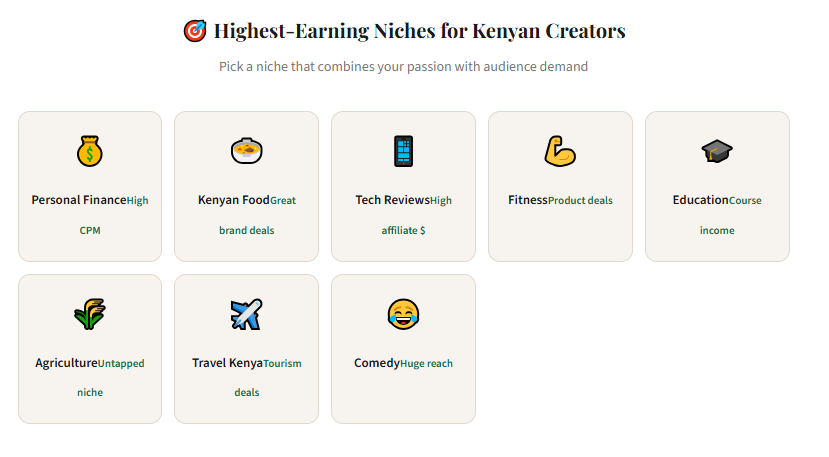
Your niche matters more than your follower count. A fitness creator with 8,000 dedicated followers in Nairobi can charge more for a protein supplement deal than a general creator with 40,000 passive followers. Brands want access to a specific, engaged audience.
The key to getting deals is professionalism. You need a media kit — a one-page document showing your niche, audience demographics, engagement rate, and pricing. Keep it clean and branded. Email it directly to marketing managers at companies you genuinely use and believe in.
Always negotiate. The first offer is rarely the final offer. And never do free “exposure” deals — your content has real value, and a brand that cannot afford to pay you probably cannot convert your audience anyway.
🚀 How to Land Your First Brand Deal
- Pick your niche: Food, fashion, tech, fitness, comedy, finance, agriculture — go specific.
- Build a media kit: Include your bio, audience stats, content samples, and pricing tiers (post, story, video).
- Identify targets: List 20 Kenyan brands that align with your niche and actually spend on marketing.
- Pitch via email & LinkedIn: Address a real person — find the marketing manager’s name.
- Follow up twice: Brands are busy. One polite follow-up email after 5 days is professional, not pushy.
- Deliver & report: Always send performance stats after the campaign — this turns one deal into a long relationship.
💡
Kenyan creator tip: Join the Creators Network Kenya WhatsApp and Facebook groups. Brands post paid opportunities there regularly, and fellow creators share which companies actually pay on time.
2. YouTube AdSense Revenue
YouTubeKES 3,000 – KES 80,000+ per month
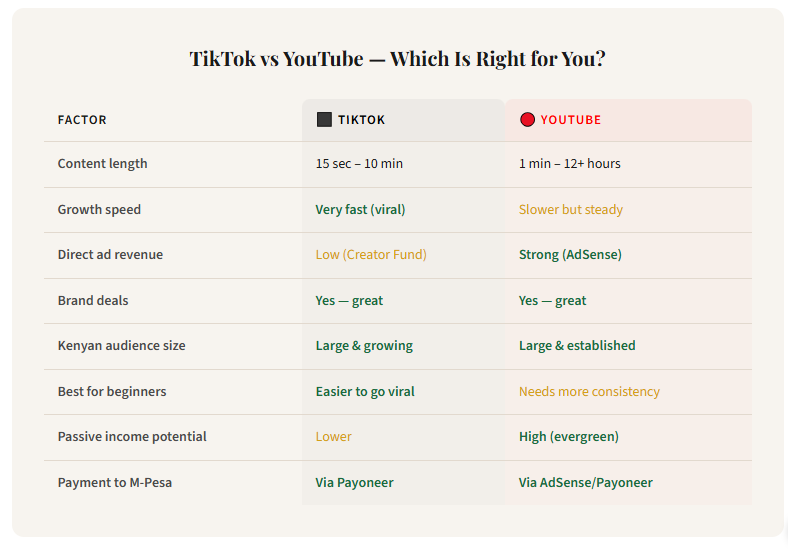
YouTube’s Partner Program (YPP) lets you earn money from ads shown before and during your videos. It is passive income — once your video is up, it can keep earning money for years. I know a Kenyan creator who made KES 18,000 in one month from a video he uploaded in 2021. That is the power of evergreen content.
To join the YouTube Partner Program in Kenya, you need 1,000 subscribers and 4,000 watch hours in the past 12 months — or 1,000 subscribers and 10 million Shorts views in 90 days. This is achievable. Many Kenyan creators hit this milestone within 6 to 12 months of consistent posting.
The type of content determines how much you earn per 1,000 views (CPM). Finance, business, and tech videos attract higher-paying ads and earn more. Entertainment and comedy typically have lower CPMs but attract large audiences. In Kenya, CPMs typically range from $0.50 to $3.00 depending on your audience’s location — if your viewers are in the US or UK, you earn significantly more.
Long-form videos perform better for AdSense than Shorts. Aim for videos that are 8–15 minutes long because YouTube can place multiple mid-roll ads, increasing your revenue per view. Talk through your subject thoroughly, add value, and retain viewers for as long as possible.
Consistency is everything. Uploading one video per week is far better than bursts and silence. Build a content calendar, batch record your videos, and schedule them ahead. Your channel grows like a compound interest account — slowly at first, then very quickly.
📈 YouTube AdSense Quick-Start Checklist
- Set up a Google account dedicated to your channel — keep it professional.
- Choose a niche you can talk about consistently for 2+ years (not just what’s trending).
- Create 10 videos before worrying about monetization — build the habit first.
- Optimize every video: keyword-rich title, detailed description, 5–8 tags, custom thumbnail.
- Apply for YPP as soon as you hit 1,000 subscribers and 4,000 watch hours.
- Link your M-Pesa to AdSense via a Kenyan bank or Payoneer to receive payments.
💡
Boost your CPM: Attract international viewers by covering topics that have global interest — productivity, personal finance, tech reviews, or English-language educational content. A view from the US earns you 5–10x more than a local view.
3. TikTok Creator Fund & Pulse Program
TikTokKES 500 – KES 15,000 per month (direct)
TikTok pays creators directly through two main programs: the Creator Fund and the newer Creativity Program (also called TikTok Pulse). The Creator Fund pays a small amount per 1,000 views, and while the rates are low, it is still passive income from content you are already making.
To qualify, you need at least 10,000 followers and 100,000 views in the past 30 days. Kenya is eligible for the Creator Fund, and payments come via Payoneer, which connects easily to M-Pesa or local bank accounts. The Creativity Program Beta, which pays more, requires videos longer than one minute.
Do not rely on TikTok’s direct payments alone — the rates are genuinely low. Think of it as a bonus on top of your brand deals and other income streams. If you are getting 500,000 views per month, the Creator Fund might add KES 2,000–5,000. Not huge, but not nothing either.
What TikTok does brilliantly is growth. No other platform can grow a brand-new account from zero to 10,000 followers in 30 days if you post the right content. Use TikTok to build your audience fast, then monetize that audience through brand deals, product sales, and affiliate links.
TikTok LIVE is another income stream many Kenyan creators overlook. During live sessions, your audience can send you virtual gifts that convert to real money. Engaging, entertaining, or educational LIVE sessions can earn KES 2,000–20,000 in a single session once you have built a loyal fanbase.
🎯 Growing Fast on TikTok Kenya
- Post 1–2 times daily for your first 60 days — volume beats perfection at the start.
- Hook in the first 2 seconds: Start with a bold statement, shocking fact, or question.
- Use trending audio in 50% of your videos — it pushes you into the “For You” algorithm.
- Include 3–5 relevant hashtags: Mix niche tags (#KenyanCreator) with broad ones (#Kenya).
- Reply to every comment in the first hour after posting — this signals to TikTok that your content is worth pushing.
4. Selling Digital Products
TikTokYouTubeKES 20,000 – KES 500,000+ per month
This is one of the highest-earning, lowest-cost models available to any creator. You create something once — an eBook, a template, a Lightroom preset pack, a recipe guide, a social media calendar — and sell it over and over again. No inventory, no shipping, no factory. Just pure digital delivery.
Kenyan creators are doing this brilliantly right now. A food creator sells a PDF cookbook for KES 500. A business coach sells a business plan template for KES 1,200. A photographer sells 50 Lightroom presets for KES 800. These products cost nothing to fulfill, and every sale goes straight to your M-Pesa.
The content on your TikTok and YouTube channel is your marketing funnel. You give 80% of your knowledge for free in your videos, and the 20% premium goes into your paid product. If someone watches 10 of your cooking videos and loves them, they are very likely to buy your KES 500 cookbook without hesitation.
You can sell digital products through platforms like Gumroad, Payhip, or Selar (which is built specifically for African creators and accepts M-Pesa payments directly). Just drop your product link in your bio and every video description.
Start with what you already know. Do you understand farming? Build a PDF crop calendar for small-scale farmers. Are you a makeup artist? Create a tutorial video bundle. Do you know how to pass KCSE exams? Sell revision notes. Your knowledge is already valuable — package it.
📦 Create Your First Digital Product in 7 Days
- Day 1: Survey your audience — post a poll asking what problem they need solved.
- Day 2–3: Create the product (use Canva for eBooks and templates — it is free and easy).
- Day 4: List it on Selar or Gumroad with M-Pesa payment enabled.
- Day 5: Create a TikTok or YouTube video that solves a small part of the problem — and mentions the full solution in your product.
- Day 6–7: Share across all your platforms; respond to every question and comment personally.
💡
Price in Kenyan shillings: Always price your digital products in KES on platforms that support it. Seeing “KES 500” feels far more approachable to your Kenyan audience than “$3.50.”
5. Affiliate Marketing
TikTokYouTubeKES 5,000 – KES 150,000+ per month
Affiliate marketing is simple: you promote someone else’s product using a special tracking link, and you earn a commission every time someone buys through your link. You do not handle the product, the payment, or the delivery. You just connect buyers to sellers.
For Kenyan creators, there are great local and international affiliate programs. Jumia Kenya has an affiliate program where you earn 2–10% on every sale. Amazon Associates pays you in USD. Safaricom reseller programs, digital course platforms like Udemy, and web hosting companies like Hostinger all pay solid commissions.
The key is alignment. If you run a tech channel, review laptops and link to Jumia. If you run a travel channel, link to Booking.com’s affiliate program. If you run a finance channel, promote verified M-Pesa-compatible trading platforms or insurance products. Mismatch kills conversions — your audience clicked on you for your niche, not random products.
YouTube is actually better for affiliate marketing than TikTok because you can place clickable links in video descriptions. Make product review videos, comparison videos, or “best of” listicle videos — these attract buyers who are already in research mode and ready to purchase.
Track your numbers. Most affiliate platforms give you a dashboard showing clicks, conversions, and earnings. Study which products convert best with your audience and double down on those. Affiliate income compounds as your content library grows — an old video can keep sending you commissions for years.
🔗 Affiliate Marketing Quick-Start for Kenyan Creators
- Sign up for Jumia Affiliate — it is free and takes 10 minutes at affiliate.jumia.co.ke.
- Join 2–3 programs max at first — do not spread your links across 20 products.
- Create content around the product: Reviews, unboxings, tutorials, comparisons.
- Pin your affiliate link in your YouTube description, TikTok bio, and comment section.
- Disclose it honestly: “I earn a small commission if you buy through my link — at no extra cost to you.” Transparency builds trust and sales.
6. Paid Shoutouts & Promotions
TikTokYouTubeKES 3,000 – KES 50,000 per shoutout
Smaller than a full brand deal but faster to execute, paid shoutouts are when a business or individual pays you to mention them briefly in your content. This could be a 15-second mention at the start of a TikTok video, a “special thanks to our sponsor” in a YouTube video, or a dedicated story-style post.
In Kenya, small businesses are particularly hungry for this. A boutique in Westlands, a food delivery startup, a local SACCO, a university, or even a fellow creator trying to grow their channel may pay you KES 3,000–15,000 to be mentioned to your audience.
The best place to sell shoutouts is Shoutcart, or simply through your own DMs and email. Many Kenyan creators create a simple rate card on their Instagram or TikTok bio that reads: “For business inquiries and promotions, WhatsApp +254…” This invitation alone attracts multiple clients per month once you have a decent following.
Keep your shoutouts authentic. Only promote businesses or people you actually believe in. One bad promotion that betrays your audience’s trust is worth ten times more in lost followers than the KES 5,000 you earned. Your audience is not just a number — they are real people who rely on your recommendations.
Bundle your shoutout offers. Offer a package: “3 TikTok mentions + 1 YouTube mention + 2 weeks in my bio link” for KES 25,000. Packages are easier to sell than individual mentions because they offer perceived value and spread the client’s budget across multiple touchpoints.
7. Online Courses & Coaching
TikTokYouTubeKES 50,000 – KES 1,000,000+ per month
If you know something well enough to teach it, you can turn that knowledge into a course or coaching program. This is the single highest-earning income model for creators who are willing to do the work upfront. Kenyan creators are running six-figure courses in digital marketing, programming, financial literacy, social media management, agribusiness, and more.
Your TikTok and YouTube channel is the perfect engine to attract students. Every video you post is a free sample of your teaching ability. When someone watches 20 of your “how to start a business” videos and gets real value, they are primed to pay KES 5,000–15,000 for your full course.
You do not need a fancy Learning Management System to start. Many Kenyan creators start with a simple WhatsApp group or Telegram channel where they share video lessons, PDFs, and live Q&A sessions. Payment via M-Pesa is instant and straightforward. Start messy and improve as you grow.
Coaching is even more premium. One-on-one or group coaching calls can charge KES 3,000–15,000 per session. If you have expertise in farming, marketing, or business development, there are thousands of Kenyans willing to pay for your direct, personalized guidance. Use YouTube and TikTok to build trust, then sell access to you.
Consider launching a cohort — a group of 20–50 students who go through your program together over 4–8 weeks. Create community and accountability. Cohort courses feel more premium and personal. Charge KES 8,000–30,000 per student. One successful cohort launch can generate more than six months of AdSense income in a single weekend.
🎓 Launch Your First Online Course
- Validate first: Post a TikTok or YouTube video asking “Would you pay for a full course on [topic]?” If 200+ people say yes, build it.
- Outline 10–15 lessons covering your topic from beginner to intermediate level.
- Record on your phone — clear audio matters more than video quality. Use a KES 800 lapel mic.
- Host on WhatsApp or Teachable for your first launch. Keep it simple.
- Pre-sell before you finish: Open enrollment 2 weeks before the course is done. This gives you revenue and motivation to complete it.
8. Merchandise & Print-on-Demand
TikTokYouTubeKES 10,000 – KES 200,000+ per month
Once you build a loyal audience that truly identifies with your brand and personality, merchandise becomes a natural income stream. Your followers want to wear your catchphrase, carry your logo, or display a design that represents your community. This is both income and free advertising.
For Kenyan creators, print-on-demand services mean you do not need to hold inventory or handle shipping yourself. Services like Printify, Redbubble, and local printers in Industrial Area, Nairobi can produce t-shirts, hoodies, mugs, phone cases, and tote bags on demand. You only pay for what is ordered.
The sweet spot is creating merchandise with cultural relevance. Nairobi slang, Kenyan pride quotes, tribe-inspired artwork, or your signature joke in Sheng make for products people genuinely want to wear. Generic merchandise with just your channel logo sells poorly. Emotionally resonant designs sell very well.
Launch your first merch drop as a limited edition. Announce it in a video, create urgency with a 72-hour window, and use TikTok LIVE to show the designs. Limited drops create FOMO (fear of missing out) and drive faster purchasing decisions than a permanent shop that people always intend to visit “later.”
Local production is also an option once you validate demand. Partner with a Nairobi screen-printer to produce 50 t-shirts at KES 500 each and sell them for KES 1,500. That is KES 50,000 in revenue from a KES 25,000 investment — a 100% margin. Use your TikTok and YouTube audience as your storefront.
💡
Start with one product: Do not launch 15 merch items at once. Start with one great t-shirt design. Test demand, collect feedback, then expand. One beloved product is worth ten mediocre ones.
9. Live Gifts, Super Thanks & Channel Memberships
TikTokYouTubeKES 5,000 – KES 100,000+ per month
Both TikTok and YouTube allow your audience to pay you directly during and after your content. TikTok LIVE gifts let viewers buy virtual roses, lions, or rockets and send them to you in real time. YouTube has “Super Thanks” (a tip on regular videos) and “Super Chat” (tips during live streams). These are small but meaningful income streams that grow significantly with an engaged audience.
YouTube Channel Memberships are particularly powerful. For a monthly fee — which you set, typically $1.99–$9.99 — members get special perks like badge icons in comments, exclusive content, early access to videos, and shout-outs. Even 100 loyal members paying $3 per month earns you $300 (~KES 42,000) in recurring monthly income.
Going LIVE regularly is the engine that makes these income streams work. Kenyan creators who go live 3–4 times per week consistently earn more from gifts and Super Chats than those who only post pre-recorded content. LIVE sessions build a level of personal connection that recorded videos simply cannot replicate.
Make your LIVE sessions valuable. Q&A sessions, cooking demonstrations, behind-the-scenes content, gaming sessions, live storytelling, or community hangouts all perform well. The more your viewers feel like they are part of something special, the more they are willing to tip and gift.
Acknowledge every gift and donation out loud by name during your LIVE. “Thank you so much Wanjiru for the rose — unaona unampenda!” creates a rewarding experience that encourages others to tip. Public acknowledgment is a simple but powerful way to drive repeat generosity from your most loyal fans.
10. Freelance Video Services
TikTokYouTubeKES 30,000 – KES 300,000+ per month
Here is one income stream most creators completely overlook. By running a TikTok or YouTube channel, you are developing real, in-demand skills: video editing, scriptwriting, on-camera presenting, thumbnail design, SEO optimization, and content strategy. Businesses will pay very well for these skills.
Hundreds of Kenyan businesses need video content for their social media but do not have the skills or time to create it. Hotels, hospitals, schools, real estate agents, restaurants, NGOs, and tech startups are all potential clients. You can offer to create their TikTok and YouTube content as a monthly retainer — KES 30,000–100,000 per client per month for a package of 8–12 videos.
Your own channel is your portfolio. When a potential client asks “Can you do this?” you point them to your channel. Every video you have posted is proof of your capabilities. This is why building your own channel first — even before you start freelancing — is the smart move.
Platforms like Fiverr, Upwork, and local Facebook groups like “Kenya Freelancers” let you advertise your video services to both local and international clients. International clients pay in USD, which translates very favorably to KES. A YouTube video editing package that costs $150 on Fiverr takes you 3–4 hours and equals KES 21,000+.
Package your freelance services clearly. Offer three tiers: a basic package (5 short-form videos per month), a standard package (10 videos + basic SEO), and a premium package (full content strategy + 15 videos + performance reporting). Clear packages remove the awkward pricing conversation and let clients self-select based on their budget.
💼 Start Your Video Freelance Business
- List your skills: Editing, scripting, filming, voice-over, thumbnail design — what are you actually good at?
- Create a Fiverr or Upwork profile today — use your best videos as portfolio samples.
- Offer a free sample to your first 2–3 clients to build reviews — then raise your prices.
- Join Kenya business Facebook groups and post your services with a clear rate card.
- Ask for referrals: Every happy client should introduce you to two more. This snowballs fast.
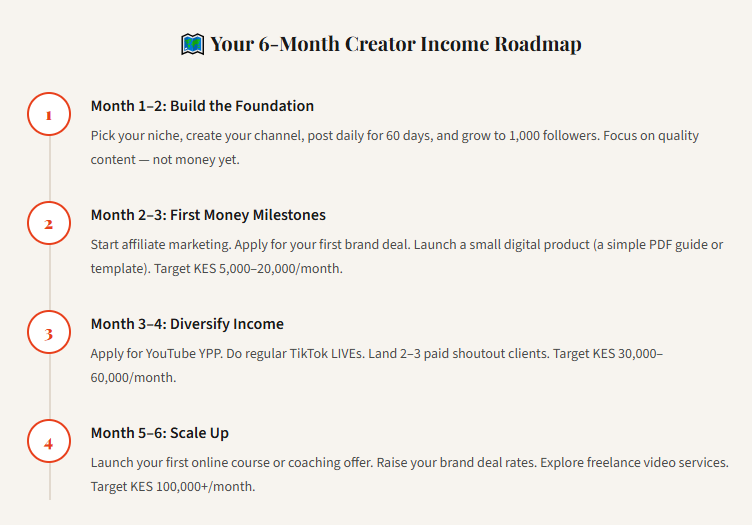
One Last Thing Before You Go
Every successful Kenyan creator I have spoken to has told me the same thing: the first income stream is the hardest. The second one comes faster. By the third, you start to see the full picture — that your content is a business, and that business can genuinely support your life.
Do not try to implement all 10 ideas at once. Pick the two that excite you most, execute them well for 90 days, and then add another. Consistency over 6 months will outperform bursts of motivation every single time.
Also remember that the Kenyan creator economy is still young. The creators who build their audiences and systems now — before the market gets saturated — are the ones who will dominate for the next decade. That could be you.
Now stop reading and go record something. Your audience is waiting.
Ready to Start Earning as a Kenyan Creator?
Save this article, share it with a fellow creator, and pick your first income stream today. The best time to start was yesterday. The second best time is right now.