

Working online has become one of the most exciting opportunities for young Africans. In Kenya especially, thousands of people are searching for ways to earn money from home using only a laptop and internet connection. One platform that gained massive attention in recent years is Remotasks.
Remotasks is a micro-task platform where workers complete small digital tasks that help train artificial intelligence systems. These tasks include labeling images, transcribing audio, evaluating AI responses, and categorizing data. Companies use this data to improve AI tools, autonomous vehicles, and machine learning models.
However, if you’re in Kenya, there is an important reality to understand first. In 2024, reports indicated that Remotasks stopped operations for users located in Kenya, leaving many workers unable to access the platform.
But the story doesn’t end there. The remote-work ecosystem is constantly changing, and similar AI-training platforms continue to appear. Understanding how Remotasks works still provides a valuable blueprint for getting started in AI data work and micro-tasking online.
In this guide, I’ll walk you through:
- What Remotasks is
- Whether Kenyans can still use it
- The exact step-by-step process to start working
- How much money you can realistically earn
- Payment methods and withdrawal tips
- The best strategies Kenyan workers use to succeed
What Is Remotasks and How Does It Work?
Remotasks is a platform designed to crowdsource human intelligence. Companies building AI systems need large amounts of labeled data, and Remotasks connects them with online workers who can complete those tasks.
Instead of hiring full-time employees, companies post thousands of small tasks online. Workers then log in and complete these tasks to earn money.
How AI Microtasks Work
The typical workflow looks like this:
- A company needs data to train AI systems.
- The company uploads tasks to Remotasks.
- Workers log in and complete these tasks.
- Tasks are reviewed for accuracy.
- Workers are paid for accepted work.
These tasks may look simple, but they are extremely valuable for training machine learning systems.
For example:
- Self-driving car companies need images labeled so vehicles can recognize pedestrians.
- Voice assistants need transcription data to improve speech recognition.
- AI chatbots need human feedback to improve responses.
By completing tasks, workers are essentially helping train AI technology.
Why Remotasks Became Popular in Kenya
Remotasks exploded in popularity among Kenyan youth because it provided flexible online work.
Many students, freelancers, and stay-at-home parents discovered they could earn dollars from home.
The platform gained huge attention when a Kenyan student shared with the president that he had earned over $200 working on Remotasks.
For many people, this opened their eyes to the possibility of earning online.
Important Reality Check
While Remotasks is legitimate, it is not a get-rich-quick scheme.
Most beginners start with small tasks that pay only a few cents each. Over time, as you gain experience and accuracy, you unlock higher-paying projects.
This means patience and consistency are required.
Is Remotasks Available in Kenya Right Now?
Before we go into the step-by-step process, we need to address the most important question.
The Current Situation
In March 2024, reports showed that Remotasks ceased operations in Kenya, preventing local users from accessing the platform.
Many workers attempting to log in received the message:
“You are unable to access remotasks.com.”
The exact reasons were never fully clarified publicly, but several reports suggested regulatory and data-policy concerns.
What This Means for Kenyan Workers
Even though the platform stopped operating locally, understanding Remotasks is still valuable because:
- The platform may reopen in the future.
- Similar AI-training platforms operate the same way.
- Many workers transitioned to related platforms.
Learning how Remotasks works prepares you for opportunities like:
- AI training jobs
- data annotation work
- online micro-tasks
The Key Lesson
The most important takeaway is this:
Online work opportunities evolve constantly.
Platforms come and go, but the skills remain valuable.
Skills you learn from Remotasks include:
- data labeling
- AI evaluation
- transcription
- attention to detail
- remote work discipline
These skills are highly transferable.
Requirements to Start Working on Remotasks
Before you create an account, there are a few requirements you must meet.
Basic Requirements
Most people in Kenya can meet these requirements easily.
You typically need:
- Age 18 or older
- Strong English reading skills
- A laptop or desktop computer
- Stable internet connection
- A valid PayPal account
Remotasks pays workers in US dollars through PayPal.
After receiving payment, Kenyan users normally transfer funds to M-Pesa or a bank account.
Device Requirements
Although some tasks work on smartphones, a laptop is strongly recommended.
Complex tasks like:
- 3D LiDAR annotation
- advanced image labeling
- AI evaluation
require larger screens and more precise input.
Internet Connection
Your internet does not need to be extremely fast, but it must be stable.
Most Kenyan workers use:
- Safaricom Home Fiber
- Airtel data bundles
- Faiba
Unstable internet can cause task submission failures.
Skills That Help You Earn More
While beginners can start with no experience, the following skills increase your earnings:
- attention to detail
- patience
- fast typing
- logical thinking
- ability to follow instructions
Accuracy matters more than speed.
Step-by-Step: How to Get Started on Remotasks
Now let’s walk through the complete process.
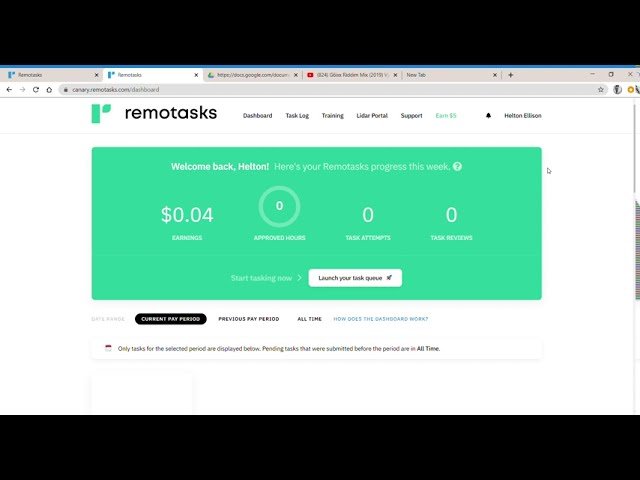
Step 1: Create Your Remotasks Account
The first step is to create your account.
Here is how the process works.
- Visit the Remotasks website.
- Click Sign Up.
- Enter your email address.
- Create a password.
- Confirm your location.
You can also sign up using:
- Google account
- Facebook account
Once registered, you must verify your email before accessing the dashboard.
Pro Tip
Always use the same email as your PayPal account.
This helps avoid payment issues later.
Step 2: Complete Training Modules
This is where many beginners quit.
Before you start earning, you must complete training courses.
Training teaches you how to perform tasks correctly.
Examples include:
- Image annotation
- object labeling
- audio transcription
- LiDAR annotation
Training can take several hours or even days depending on the task category.
Most training is unpaid, which surprises many beginners.
However, once you pass training tests, you unlock paid tasks.
Step 3: Pass Qualification Tests
After training, you must pass a test.
These tests ensure you understand the task instructions.
Typical passing scores are:
- 70% – 80%
If you fail, you can retake the test after waiting a few hours.
The most important advice here is simple:
Read instructions carefully.
Many workers fail because they rush through training.
Step 4: Start Completing Tasks
Once you pass training, you can begin working.
Your dashboard will display available tasks.
Typical beginner tasks include:
- drawing boxes around objects
- labeling images
- categorizing photos
- tagging videos
Each completed task earns a small payment.
Accuracy determines whether your work is accepted.
Step 5: Build Your Trust Score
Remotasks uses a trust score system.
Workers with high accuracy unlock better projects.
Benefits include:
- higher-paying tasks
- access to advanced projects
- priority task allocation
Workers with poor accuracy may lose task access.
This is why accuracy is critical.
Types of Tasks You Can Do on Remotasks
Remotasks offers several types of work.
Here are the most common ones.
1. Image Annotation
This is the most common beginner task.
You look at images and identify objects.
Examples:
- cars
- pedestrians
- street signs
- animals
You draw boxes around these objects to help train AI systems.
This work is used in technologies like self-driving cars.
2. Audio Transcription
In transcription tasks, you listen to audio recordings and type what you hear.
These recordings may include:
- conversations
- interviews
- voice commands
The goal is to improve speech recognition systems.
Typing speed helps a lot here.
3. AI Response Evaluation
This is one of the most interesting tasks.
Workers review AI responses and rate them.
For example:
- Which answer is more accurate?
- Which response sounds more natural?
- Did the AI follow instructions?
This type of work helps improve large language models.
4. 3D LiDAR Annotation
This is the highest-paying task category.
However, it is also the most difficult.
You label objects in 3D point-cloud images captured by self-driving vehicles.
These tasks require extensive training.
But experienced workers can earn significantly more.
How Much Money Can You Make on Remotasks?
This is the question everyone asks.
The honest answer is:
It depends on your skill level and available tasks.
Beginner Earnings
Simple tasks may pay:
- $0.02 – $0.10 per task
Experienced workers may complete dozens of tasks per hour.
Some estimates suggest beginners earn about $1 – $5 per hour depending on speed and task availability.
Intermediate Earnings
Once you unlock advanced projects, earnings improve.
Examples include:
- AI training projects
- transcription
- content moderation
Some workers earn $10 – $20 per day depending on available work.
High-Level Projects
Specialized AI training roles can pay significantly more.
However, these opportunities are rare and require strong performance.
How Remotasks Payments Work
Remotasks payments are straightforward.
Workers are paid weekly in US dollars.
Payments are sent via PayPal every Thursday.
Payment Process
The typical process works like this:
- Complete tasks during the week.
- Approved tasks are added to your balance.
- Payments are processed weekly.
- Money is sent to PayPal.
Withdrawing Money in Kenya
Once funds reach PayPal, most Kenyans transfer money to:
- M-Pesa
- bank accounts
However, PayPal fees and currency conversion may reduce your earnings slightly.

Tips to Succeed on Remotasks
Here are practical tips I’ve learned from experienced workers.
1. Focus on Accuracy
Accuracy is more important than speed.
Low accuracy can lead to:
- task removal
- account suspension
- reduced task access
2. Work During Peak Hours
Most tasks are posted when US companies are active.
Best times in Kenya:
- 9 PM – 6 AM
3. Join Online Communities
Many workers share tips in:
- Telegram groups
- Facebook groups
- Discord servers
These communities help you find active projects faster.
4. Avoid Account Scams
Never buy a Remotasks account.
Many sellers claim to offer “US verified accounts.”
These accounts often get banned.
5. Keep Learning
The workers who earn the most continuously learn new task types.
Advanced projects always pay more.
Common Challenges Kenyan Workers Face
Although Remotasks offers opportunities, it also has challenges.
Task Shortages
Sometimes there are no tasks available.
This is one of the most common complaints.
High competition means tasks disappear quickly.
Unpaid Training
Training can take several hours or days before earning begins.
Many beginners quit during this stage.
Account Suspensions
Workers with poor accuracy may lose access to tasks.
This is why quality matters.
Payment Delays
Occasionally payments may take longer during account verification.
But most payments eventually arrive.
Alternative Opportunities for Kenyans to Access Remotasks
Because many Kenyan users currently cannot directly access Remotasks, many workers have started exploring alternative ways to continue working on the platform. Some of these methods involve collaborating with friends abroad or accessing the platform through remote connections.
Before trying any of these options, it is important to understand that platforms like Remotasks have strict terms of service, and violating them can lead to account suspension. That said, many online workers discuss these methods as potential workarounds while waiting for the platform to officially reopen in Kenya.
Below are some of the most commonly discussed approaches.
1. Having a Friend Abroad Create an Account for You
One of the most common workarounds Kenyan workers talk about is partnering with a trusted friend or family member who lives in a country where Remotasks is still available.
In this arrangement, the friend creates the account using their local details and location. After the account is set up, they share access with you so that you can complete the tasks remotely.
Here is how people typically structure this setup:
- A friend in a supported country signs up for Remotasks.
- The account is verified using their local phone number and identity.
- They share the login credentials with you.
- You complete the tasks while they manage withdrawals.
Many workers then split the earnings with the friend or pay them a small percentage for allowing the account to be used.
This type of partnership requires a very high level of trust, because the account owner controls the payments.
If you choose this route, make sure the person is someone you trust completely.
2. Using a VPN to Access the Platform
Another commonly discussed method is using a Virtual Private Network (VPN).
A VPN allows you to connect to the internet through a server in another country. This can make it appear as though you are browsing from that country instead of Kenya.
Some workers use VPNs to connect to countries where Remotasks is still operating.
The basic process looks like this:
- Install a reliable VPN service.
- Connect to a supported country.
- Access the Remotasks website.
- Log in and work normally.
However, it is important to note that many platforms have anti-VPN detection systems. If the system detects suspicious login locations, your account may be flagged or suspended.
Because of this risk, VPN use is not always reliable for long-term work.
3. Working Through Remote Desktop (RDP)
Another option some online workers use is Remote Desktop Protocol (RDP).
Instead of masking your location with a VPN, an RDP allows you to connect to a computer that is physically located in another country.
This means all activity appears to originate from that remote computer rather than your device in Kenya.
The typical workflow looks like this:
- Rent a remote desktop server located in a supported country.
- Connect to the server from your computer.
- Open Remotasks inside the remote desktop.
- Complete tasks as usual.
Because the remote server is located outside Kenya, some workers report fewer location-detection issues compared to VPNs.
However, renting a good RDP server usually costs $10–$30 per month, so you need to make sure your earnings can cover the cost.

4. Working as Part of an Online Team
Another strategy many experienced Remotasks workers use is joining an online team.
These teams are often organized through:
- Telegram groups
- Discord communities
- private WhatsApp groups
In these communities, some people already have verified accounts in supported countries.
They recruit others to help complete tasks and share the earnings.
For example, a team leader may:
- manage the Remotasks account
- distribute tasks among workers
- pay workers weekly through PayPal or crypto
This setup works similarly to outsourcing.
While this model can help you gain experience, you should always be cautious and verify the legitimacy of the team before joining.
5. Waiting for the Platform to Reopen
Sometimes the simplest option is also the safest.
Platforms frequently update their policies, and access restrictions may change in the future.
If Remotasks eventually reopens for Kenyan users, those who already understand the system will be able to start working immediately.
This is why learning how these platforms operate is still extremely valuable.
When opportunities return, you will already have the knowledge needed to move quickly.
A Word of Caution
While the methods above are commonly discussed among online workers, they may violate the platform policies of Remotasks.
Accounts found using location-bypassing techniques can be suspended, and earnings may be forfeited.
If you decide to try any workaround, you should understand the risks involved.
The safest long-term strategy is always to work on platforms that officially support your country.
The Bigger Opportunity
The good news is that the AI training industry is expanding rapidly.
Platforms similar to Remotasks continue to appear, offering opportunities for people around the world to earn online.
For Kenyan workers who develop strong skills in:
- data labeling
- transcription
- AI evaluation
- image annotation
there will likely be many opportunities in the coming years.
In fact, AI data work may become one of the largest sources of remote income for Africans in the next decade.
Best Alternatives to Remotasks for Kenyans
Even though Remotasks stopped operating locally, many similar platforms exist.
Examples include:
- AI data labeling platforms
- transcription websites
- online freelancing marketplaces
These platforms follow similar workflows.
Learning Remotasks skills prepares you for them.
Final Thoughts
Getting started with Remotasks can be an exciting way to enter the world of online work.
The platform allowed thousands of people to earn money by completing simple digital tasks and contributing to the development of AI technologies.
However, it is important to understand both the opportunities and the challenges.
Success requires:
- patience
- accuracy
- consistency
- continuous learning
Even though Remotasks operations changed in Kenya in 2024, the demand for AI training work continues to grow.
And that means the skills you learn from platforms like Remotasks remain extremely valuable.
For many Africans looking to earn online, AI micro-task platforms may become one of the biggest remote job opportunities of the next decade.