

The digital economy in Kenya has shifted gears. If you are looking for a way to earn a consistent income from the comfort of your home, transcription remains one of the most reliable paths. Whether you are a student at UoN looking for pocket money or a stay-at-home parent in Nakuru aiming for a full-time career, the opportunities this year are more diverse than ever.
I have spent years navigating the world of online work, and I can tell you that the secret to success isn’t just about typing fast. It’s about knowing which platforms value your time and pay fairly in a world where AI is changing the landscape. In this guide, I’m breaking down the top 11 transcription opportunities that are currently hiring and paying Kenyans.
1. Rev: The Reliable Giant
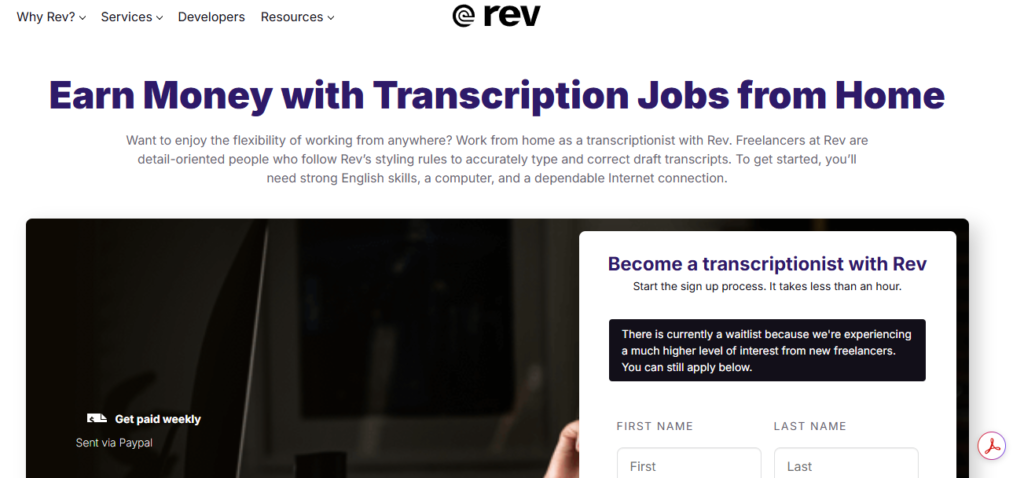
Rev has been a staple in the transcription world for a decade, and they remain a top choice for Kenyans due to their seamless payment system. They offer a variety of work, from basic transcription to captioning and subtitling. The best part? They pay weekly via PayPal, which integrates perfectly with M-Pesa for quick withdrawals.
To get started with Rev, you’ll need to pass a fairly rigorous grammar and style test. Don’t let this intimidate you; they provide a comprehensive style guide that tells you exactly how they want their files formatted. Once you are in, you can choose from a massive marketplace of files. You aren’t assigned work; you pick what interests you, whether it’s a legal deposition or a celebrity interview.
Currently, Rev has integrated AI-assist tools that help you work faster. Instead of typing every word from scratch, you often start with an AI draft and “clean it up.” This shift has actually increased the earning potential for fast editors. You can easily move from a “Rookie” to a “Revver” and eventually a “Revver Plus” by maintaining high accuracy scores, which unlocks higher-paying files and early access to new jobs.
The competition on Rev is high, so you need a good pair of noise-canceling headphones to catch the nuances of different accents. If you are consistent, you can earn anywhere from $200 to $900 a month depending on your speed and the amount of time you dedicate. It’s a marathon, not a sprint, so focus on your accuracy first.
Steps to Join Rev:
- Visit the Rev freelance page and sign up as a transcriptionist.
- Study the Rev Style Guide thoroughly—it’s the “Bible” of their platform.
- Take the online grammar and transcription test.
- Wait for approval (usually takes 48 hours to a week).
- Start claiming short files to build your reputation.
2. TranscribeMe: Best for Beginners
If you are brand new to the world of online work, TranscribeMe is often the best place to cut your teeth. They specialize in “micro-task” transcription, meaning you won’t be hit with a 60-minute audio file on day one. Instead, you work on short clips, usually 2 to 4 minutes long. This is perfect for building your stamina and getting used to the software.
The entry barrier for TranscribeMe is lower than Rev, but they still value high quality. Their training modules are excellent; they actually teach you how to transcribe as part of the onboarding process. For Kenyans, this is like a free mini-course in digital skills. They pay regularly and have a very supportive community of freelancers who can help you if you get stuck on a difficult audio file.
One of the unique features of TranscribeMe is their specialized “Paths.” If you show proficiency in general transcription, you can take additional exams to enter Medical or Legal transcription. These specialized fields pay significantly higher rates because they require knowledge of specific terminology. Moving into these niches is the fastest way to double your hourly rate on the platform.
Payment is handled via PayPal, and they have a low minimum withdrawal limit. This means you don’t have to wait months to see the fruits of your labor. If you have a few hours between chores or after work, you can log in, finish a few clips, and see your balance grow. It’s a very flexible “side-hustle” model that fits the busy Kenyan lifestyle.
How to Succeed on TranscribeMe:
- Register on their website and complete your profile accurately.
- Pass the Entrance Exam (you can retake it if you fail, but study first!).
- Focus on the “Special Projects” tab for higher pay.
- Use a foot pedal to control audio playback without moving your hands from the keyboard.
- Check your feedback regularly to improve your accuracy percentage.
3. GoTranscript: Great for Global Variety
GoTranscript is a UK-based company that has a massive presence in Africa. They are known for being very inclusive and offering a wide variety of languages. While you will mostly be doing English transcription, they also occasionally have projects for local languages, which can be a huge advantage if you are multilingual.
The signup process involves a test where you transcribe a short video. GoTranscript is quite specific about their formatting—for example, how they handle “umms” and “ahhs” (verbatim vs. clean read). Make sure you read their instructions twice before submitting your test. Once approved, you’ll see a dashboard full of available jobs with their respective pay rates and deadlines.
What I love about GoTranscript is their loyalty program. The more you transcribe, the higher your rating becomes. High-rated transcribers get chosen for “Editor” roles. As an editor, you don’t transcribe from scratch; you review the work of others. This is less taxing on your fingers and usually pays a higher rate per audio minute.
For Kenyans, GoTranscript is excellent because they are very reliable with payments. They pay every Friday via PayPal or Payoneer. Having Payoneer as an option is a game-changer because it often offers better exchange rates and lower fees when transferring money to your local bank account or M-Pesa.
GoTranscript Tips:
- Download their desktop app for a smoother experience.
- Apply for the Editor position as soon as you meet the requirements.
- Pay attention to the “Instructions” section of every file; some clients have custom rules.
- Use a text expander for common phrases to save time.
- Join their Facebook group to stay updated on new project batches.
4. Scribie: The “Levels” Expert
Scribie offers a very structured environment that is perfect for those who like a clear career path. They use a four-step process: Transcription, Review, Proofreading, and Quality Check. As a beginner, you start at the bottom, but you can quickly move up the ladder if your work is consistently accurate.
The pay on Scribie starts lower than Rev, but the files are often shorter and the audio quality is generally better. They provide a free automated transcript for every file, which you then edit. This “A-to-E” (AI to Edited) workflow is the standard this year, making the job more about editing than raw typing. This is great if you are a fast reader and have a sharp eye for detail.
Scribie offers bonuses for every 3 hours of audio completed. For a hardworking Kenyan freelancer, these bonuses can add up to cover your monthly internet costs (Zuku or Safaricom Home Fibre). They also have a referral program, so if you have friends who are also fast typists, you can earn a small commission from their work.
One thing to watch out for is their “grading” system. If a reviewer gives you a poor grade, it can impact your ability to select high-paying files. This keeps everyone on their toes. It’s a great platform to learn professional discipline, which will help you if you eventually decide to pitch to private clients directly.
Getting Started with Scribie:
- Link your verified PayPal account to your Scribie profile.
- Take the test—you get 10 attempts, but try to pass on the first three.
- Choose files with a high “Difficulty Score” only when you feel confident.
- Aim for the Monthly Bonus to maximize your earnings.
- Transition to the Reviewer level as quickly as possible for better pay.
5. CastingWords: The Workshop Model
CastingWords operates a bit differently. They have a “Workshop” where they post tasks. Your performance is tracked using a “Badge” system. The better your badges, the better the jobs you can see. It’s a bit like a video game where you level up your character to unlock new maps.
They offer three types of tasks: Transcription, Editing, and Grading. This variety is excellent because it prevents burnout. If you are tired of listening to audio, you can switch to grading someone else’s work for an hour. They are very transparent about their pay, and you can see exactly how much a task is worth before you click on it.
For Kenyans, CastingWords is a solid choice because they don’t have a “minimum hours per week” requirement. If you have a busy week at your day job, you can just ignore the platform and come back when you are free. This flexibility is highly valued in the gig economy. However, you do need to be active enough to keep your badges from expiring.
The pay is calculated based on a combination of the task type, your grade, and the length of the file. They pay via PayPal, and they have a “Request Payment” button, giving you more control over when you receive your money. It’s a professional, no-nonsense platform that rewards high-quality work over raw volume.
CastingWords Success Strategy:
- Read the “CastingWords Style Guide” before you even register.
- Take your time on the initial test; it determines your starting badge level.
- Focus on “Clean Verbatim” files as they are often easier to process.
- Check the workshop daily for high-priority (higher paying) tasks.
- Maintain a high “Life-time Grade” to ensure you always have work available.
6. Verbit: The AI-Hybrid Powerhouse
Verbit is a leader in the “AI-driven” transcription space. They work with major universities and corporations, which means the content is often very interesting—think college lectures on astrophysics or corporate board meetings. They are one of the biggest employers of remote transcribers globally.
Because they use sophisticated AI to generate a rough draft, your job at Verbit is technically called “Editing.” You listen to the audio and correct the AI’s mistakes. This is much faster than traditional transcription. For a Kenyan with a good command of English and a fast internet connection, Verbit can be one of the most lucrative platforms on this list.
The application process for Verbit is a bit more professional. You’ll need to provide a CV and pass a multi-stage test. They are looking for people who can handle complex terminology and fast speakers. If you have a background in a specific field like law, finance, or medicine, make sure to highlight that in your application.
Verbit pays via PayPal and Payoneer. They have a steady stream of work, especially during the US and UK academic semesters. If you are looking for a “full-time” remote job feel, Verbit is as close as it gets. You’ll feel like part of a global team contributing to accessible education.
How to Join Verbit:
- Apply through their “Freelancers” portal.
- Prepare for a test that includes both grammar and actual file editing.
- Invest in a good grammar checker tool like Grammarly to assist your editing.
- Stay active during “Peak Seasons” (September to May) for maximum work.
- Join their internal webinars to learn about new platform features.
7. Happyscribe: The Modern Freelance Hub
Happyscribe is a favorite among content creators and YouTubers. Their interface is incredibly modern and user-friendly. They operate on a “Marketplace” model where you can see all available jobs and apply for the ones that suit your expertise.
One of the best things about Happyscribe is the quality of the audio. Since most of their clients are video creators, the audio is usually recorded with professional microphones. This makes your job much easier because you aren’t struggling to hear voices over background noise. They pay per minute of audio, and the rates are very competitive for the Kenyan market.
Currently, Happyscribe has expanded their “Human-in-the-loop” services. This means they are looking for transcribers who can also do basic video subtitling. If you can learn how to time-sync captions (which is easy with their built-in tool), you can charge a premium for your services. It’s a great way to add a new skill to your CV.
They pay bi-monthly, which helps with budgeting. The community at Happyscribe is very vibrant, and they often send out newsletters with tips on how to increase your productivity. If you enjoy working on “fun” content like podcasts and travel vlogs, this is the platform for you.
Happyscribe Tips:
- Create a standout profile that mentions your specific interests (e.g., tech, cooking, sports).
- Use their built-in editor—it’s one of the best in the industry.
- Look for “Subtitling” jobs for higher pay rates.
- Be fast; the best jobs in the marketplace are claimed within seconds.
- Maintain a 95%+ accuracy rating to stay in their “Elite” pool.
8. Speechpad: The Quality King
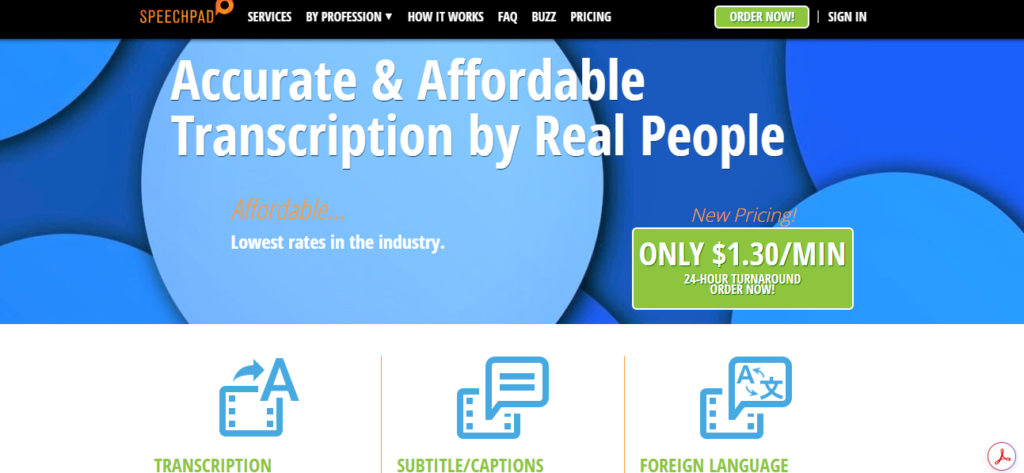
Speechpad is known for having some of the strictest quality standards in the industry, but they compensate for it with higher pay. They work with high-profile clients who require 99.9% accuracy. If you are someone who prides themselves on being a perfectionist, you will thrive here.
The signup process includes a series of tests that evaluate your typing speed, grammar, and ability to follow complex instructions. Once you are in, you start with lower-level jobs and “unlock” higher-paying ones as you prove your reliability. They have a very clear “Rating” system that determines your pay per minute.
For Kenyans, Speechpad is a great long-term option. They have been around for a long time and are very reliable with their payments (sent twice a week via PayPal). They also offer “Captioning” jobs, which involve transcribing and then placing the text at the correct time in a video. These jobs are more complex but pay significantly more.
One unique aspect of Speechpad is their “Confidentiality” requirements. You may have to sign an NDA (Non-Disclosure Agreement) for certain files. This is because they handle sensitive information. Being a “trusted” transcriber on Speechpad is a great badge of honor that you can use when looking for private clients.
Success on Speechpad:
- Complete your profile 100% and take all available qualification tests.
- Start with “Basic” files to get a feel for their specific style.
- Always proofread your work at least twice before submitting.
- Watch the “Job Board” closely; they often post large batches of work at once.
- Communicate with their support team if you encounter audio issues—they are very helpful.
9. Way With Words: The Boutique Experience
Way With Words is an international transcription company that values the “human touch.” While other companies are moving toward AI-only, Way With Words prides itself on 100% human-generated transcripts. This means they are looking for the best of the best—people who can understand thick accents, slang, and technical jargon that AI misses.
The application process is one of the toughest on this list. It involves several stages of testing. However, if you get in, you are treated as a professional rather than just a “gig worker.” They have a very loyal client base, which means the work is consistent and the pay is higher than the industry average.
For a Kenyan freelancer, getting into Way With Words is a massive win. They pay monthly via PayPal or bank transfer. Their rates are set in USD, GBP, or EUR, which means you can benefit from favorable exchange rates. They are very supportive of their African freelancers and often provide detailed feedback to help you grow.
Because they focus on high-end clients (legal, medical, and financial), the work is often intellectually stimulating. You might find yourself transcribing a high-level economic forum or a legal case. This exposure is great for your general knowledge and makes the work day feel much faster.
How to Get Into Way With Words:
- Go to their jobs page and select the “Apply” button for your region.
- Ensure you have a quiet work environment; you’ll need it for their complex files.
- Study different accents (UK, US, Australian, South African) as they have global clients.
- Be patient with the application process; they vet every candidate manually.
- Focus on “Verbatim” accuracy—they don’t want you to paraphrase anything.
10. GMR Transcription: The Generalist’s Dream
GMR Transcription is a US-based company that handles a massive volume of work. They don’t require previous experience, but they do require you to pass a test and prove that you are a US or Canada resident—however, they have recently opened up “Global” roles for high-performing international freelancers, including those from Kenya.
They are very strict about deadlines. If you claim a file, you must submit it on time, or you risk being removed from the platform. This makes it a great choice for disciplined workers who can manage their time well. They pay monthly, and the rates are based on the turnaround time (how fast the client needs the file).
What makes GMR stand out is the sheer volume of work. They have jobs ranging from academic research to focus groups and court hearings. If you are a fast typist, you can easily clear a significant amount of work in a day. They also offer translation jobs, so if you are fluent in Swahili and English, you might find even higher-paying opportunities.
They have a very active support team and a comprehensive FAQ section that covers almost every problem you might face. For a Kenyan looking to build a “career” in transcription, GMR provides the stability and volume needed to make it a primary income source.
GMR Transcription Strategy:
- Check their “Careers” page regularly for international openings.
- Use a high-quality foot pedal to speed up your workflow.
- Don’t take on more work than you can handle; late submissions are penalized.
- Focus on “Long-term” projects for more stability.
- Invest in a secondary internet connection (like a mobile hotspot) as a backup.
11. Upwork & Fiverr: The Direct Client Route
While not “transcription companies” in the traditional sense, Upwork and Fiverr are where the big money is this year. Instead of working for a middleman, you are selling your services directly to clients. This allows you to set your own rates—often $15 to $30 per hour of audio once you have a good reputation.
On Upwork, you bid on jobs posted by clients. You can search for “Kenya transcription” to find local clients or “Global transcription” for international ones. The key here is your profile. You need a professional photo, a killer bio, and a portfolio of your work. Mentioning that you are an expert in Kenyan accents can be a unique selling point for international researchers working in East Africa.
Fiverr works a bit differently; you create “Gigs.” For example: “I will transcribe 30 minutes of clear English audio for $10.” As you get more 5-star reviews, Fiverr’s algorithm will show your gig to more people. Many Kenyan transcribers start on Rev or TranscribeMe to get experience, then move to Upwork or Fiverr to maximize their hourly earnings.
The beauty of these platforms is that you can niche down. You can become “The Podcast Transcriber” or “The YouTube Subtitle Expert.” Specializing makes you more attractive to clients and allows you to charge more. Plus, you can build long-term relationships with clients who will send you work every week without you having to bid for it.
Steps to Win on Upwork/Fiverr:
- Create a professional profile highlighting your transcription experience.
- Include “Social Proof”—screenshots of your high ratings from other platforms (if allowed).
- Apply to “New” jobs quickly; clients often hire the first qualified person they chat with.
- Offer a small “Bonus” like a free summary of the transcript to stand out.
- Always be polite and professional in your communication; reviews are everything.
Essential Equipment for Kenyan Transcribers
To make a living out of this, you can’t just use your laptop’s built-in speakers. You need a “pro” setup to ensure accuracy and prevent fatigue.
| Item | Importance | Estimated Cost (KES) |
| Noise-Canceling Headphones | Critical for hearing quiet voices | 3,000 – 15,000 |
| Ergonomic Keyboard | Prevents wrist pain (Carpal Tunnel) | 2,500 – 8,000 |
| USB Foot Pedal | Speeds up work by 30% | 5,000 – 10,000 |
| Stable Internet | Essential for downloading large files | 3,000/month |
| Backup Power (UPS/Powerbank) | Crucial during “KPLC” blackouts | 5,000 – 20,000 |
Final Thoughts: How to Start Today
Transcription is not “easy money.” It requires focus, a great ear, and a lot of patience. However, it is one of the few online jobs where your pay is directly tied to your effort. The more you practice, the faster you get, and the more you earn.
This year, the key is to embrace AI, not fear it. Use tools like Otter.ai or Descript to help you generate drafts (where the platform allows), and focus your energy on being a world-class editor. This hybrid approach is what separates the $50-a-month hobbyists from the $500-a-month professionals.
Start by picking two platforms from this list. Take their tests this weekend. Even if you fail, you’ll learn exactly what they are looking for. Don’t give up—thousands of Kenyans are already earning a living this way. Why shouldn’t you be next?